
If the increase in the relative frequency of a particular variant in a given geographical area is high, that variant becomes a candidate for conferring a selective advantage.
Single amino acid changes are worth monitoring as they can be phenotypically relevant. Among coronaviruses, point mutations have been demonstrated to confer resistance to neutralizing antibodies in MERS-CoV and SARS-CoV.
THE D614G MUTATION:
The D614G mutation means the aspartic acid present in the position 614 of the SARS-Cov2 is replaced by glycine . Studies show that this mutation in the receptor binding domain of the spike protein offers the protein extra flexibility ,improving its capability to bind to the ACE-2 receptors present on the surface of the host cells . The D614G mutation thus increases the infectivity rate of the virus but it’s effect on pathogenecity isn’t completely clear .
The D614G mutation strains is almost everytime accompained by a P323L mutation.The transition from D614 to G614 occurred asynchronously starting in europe then North america and Asia.
Continous surveillance of many such mutations have been possible due to the GISAID initiative ( platform for the researchers to contribute to adding number of sequences from around the world ) .
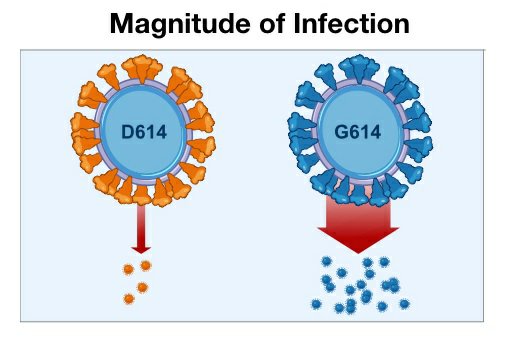
There is always a tendency for the virus to mutate as it is transmitted from one host to the other . The different strains of the virus thus undergoes selective pressure in a population and eventually the strain which offers the advantage of extended survival in the host, then becomes the dominant mutation in the pandemic .
Among corona viruses , point mutations have been demonstrated to confer antibody resistance .Thus these single point mutations can drastically impact the vaccine development and anti-body treatment strategies .
In a clinical setting, D614G mutation supposedly increased the viral loads in the upper respiratory tract , indicating improved efficiency of the virus in replication. Lower cycle threshold (ct) values in the E-gene based RT-PCR test conducted in the patients admitted due to COVID disease indicated increased viral loads . Although significant increase in viral loads have been observed, no significant disease severity have been reported due to the G614 mutation yet.
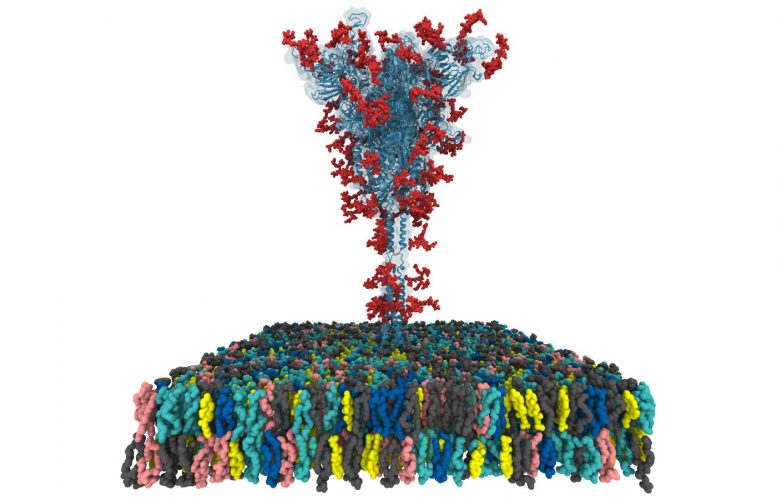
The G614 mutation is speculated to be highly infectious because it increases the affinity of the spike protein by increasing mainchain flexibility and between-protomer interactions . It also increases the susceptibility of the fusion peptide .
In experiments conducted to test the neutralization activity of the G614 variant , it was evident that the G614 variant rather underwent neutralization with the polyclonal antibody from the convalescent sera . ( doi.org/10.1016/j.cell.2020.06.043.)
In addition, there could be immunological consequences resulting from the G614 change in Spike. The G614 variant is sensitive to neutralization by polyclonal convalescent sera , which is encouraging in terms of immune interventions, but it will be important to determine whether the D614 and G614 forms of SARS-CoV-2 are differentially sensitive
to neutralization by vaccine-elicited antibodies or by antibodies produced in response to infection with either form of the virus.
Looking at various factors such as the impact of the G614 mutation geographically and in the no of sequences sampled , it is evident that the D614G mutation is already under positive selection.
With the D614G mutation containing strains staying around , it might increase the hospitalisation times eventually complicating the control measures implemented for the pandemic . But also at the same time , reduce the death rate in some cases . So mutation isn’t bad always .
With continuous surveillance of all the significant strains in a certain geographical area many such mutations are likely to become frequent and eventually become dominant .The selective advantage that each of the mutations has to offer must be studied using the clinical data and by conducting appropriate studies.

 precisionx.business.blog